Monday, July 14, 2025

History " The Most Important Revolutions That Shaped World History "


  • The French Revolution is notable for the abolishment of the French monarchy which had ruled for centuries; it demonstrated the power of the people and their ability to truly make a difference. 
  • Historians consider the Haitian Revolution to be the most successful slave rebellion in the Western world, its impact felt across the Americas.
  • The revolution of 1911 was a critical moment in Chinese history because of how it paved the way for the Chinese Communist Revolution in 1949, an uprising that established the People’s Republic of China.

History textbooks are filled with accounts of various revolutions: organized groups who fought for their lives to replace existing ruling systems. While many ended in failure, some achieved remarkable success. These uprisings often influenced not just one nation but several, occasionally extending across continents. The five revolutions listed below are especially significant for their enduring impact on the world. Change came through bloodshed, and regardless of whether the outcomes were positive or negative, the significance of these pivotal moments in history is undeniable.

The American Revolution (1765 – 1783)
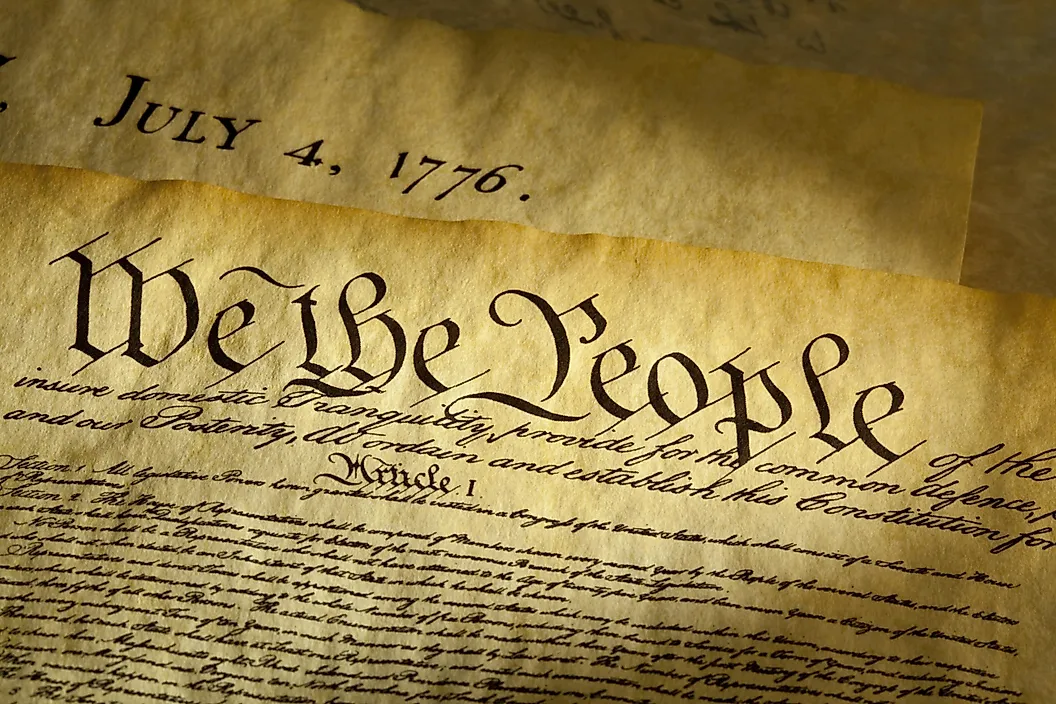
The American Constitution and Declaration of Independence. Image credit: David Smart/Shutterstock

Tensions between the British and their 13 American colonies began to mount in 1765 with the introduction of the Stamp Act, a decree imposing unpopular taxes on the colonies as a means to pay off the expenses from the Seven Years’ War with France. Pockets of violence broke out as protestors, resenting the new taxes, voiced their unhappiness. A notable act of rebellion happened in 1773, when a group of protestors known as the Sons of Liberty dumped 342 chests of tea into Boston Harbor to protest taxation on tea, an event that became known as the Boston Tea Party. In 1774, 12 delegates from the thirteen colonies came together to discuss the situation, forming the Continental Congress which served as the governing body of the colonies in the transition to independence. At first, they did not openly demand independence, but they denounced taxation without representation within the British Parliament.

War broke out in 1775 with the Battles of Lexington and Concord when the King’s forces were sent to confiscate American military weapons and supplies. On July 4 of the following year, the Continental Congress adopted the Declaration of Independence, an official proclamation rejecting the British monarchy, ultimately laying the groundwork for the formation of the United States of America. The violence continued for several years until George Washington’s troops, alongside the French army, won a decisive victory over the British at the Battle of Yorktown in 1781. The conflict officially concluded two years later with the 1783 Treaty of Paris in which the British abandoned all claims in the US.

The French Revolution (1789 – 1799)

Storming Bastille tower, July 14, 1789. Image credit: Everett Collection/Shutterstock

By the late 18th century, the people of France were living mostly in squalor, all except the nobility who lived lavish and expensive lifestyles. Frustrated with a monarchy that collected heavy taxes but offered nothing in return, the citizenry turned their widespread discontent on King Louis XVI. Historians mark July 14, 1789, as the start of the conflict when revolutionaries stormed Bastille, a medieval armory and prison, to arm themselves while simultaneously attacking a symbol of the monarchy’s absolute power. The following two months were known as the Great Fear as riots and mass hysteria consumed the country. While the National Constituent Assembly, a group of representatives from the Estates-General who were pushing for change, continued to debate France’s political future, influential figures like Maximilien de Robespierre were championing total governmental reform.

In the summer of 1792, a radical group called the Jacobins arrested the king while he was trying to escape. This resulted in the creation of the National Convention, marking the birth of the first French Republic. In January 1793, King Louis XVI was executed by guillotine, igniting ten months of excessive bloodshed during the Jacobins' Reign of Terror throughout France. Ultimately, over 17,000 individuals deemed enemies of the revolution were executed, with at least another 10,000 perishing in prison while awaiting trial. The execution of Robespierre ushered in a new phase where the French rose up against the rampant violence.  

By August 1795, executive power lay with the Directory, a five-member collective appointed by parliament, but the state of the country did not improve. After four more years of hardships, corruption, and discontent, the conflict came to an end in 1799 when Napoleon Bonaparte seized power through a coup d’état. The French Revolution is notable for the abolishment of the French monarchy that had ruled for centuries; it demonstrated the power of the people and their ability to truly make a difference. 

The Haitian Revolution (1791 – 1804)

Toussaint L'Ouverture on a 1989 1 Gourde Haitian banknote. Image credit: Georgios Kollidas/Shutterstock

Saint Domingue—modern-day Haiti—was a French colony on the Caribbean island of Hispaniola since 1659. Inspired by the French Revolution, groups of slaves rose up to fight their oppressors on August 22, 1791. Over 100,000 former slaves joined the cause, killing plantation owners and destroying their property. The French colonizers had been prepared for fear of an uprising, but this did not matter much. Led by former slave Toussaint L'Ouverture, the revolutionaries had taken control of a third of the island by 1792. To stop the bloodshed, the National Assembly back in France granted rights to the men of color in Saint Domingue.  

In 1793, the white populace forged an agreement with Britain. Concerned about uprisings in their Caribbean territories—especially Jamaica—Britain consented to invade the colony and reinstate slavery. Spain also joined the conflict, as their colony, Santo Domingo, was situated on the island of Hispaniola. Following France's official abolition of slavery in Saint Domingue in 1794, L'Ouverture transitioned from opposing them to supporting them. The British ultimately abandoned their conquest after enduring multiple defeats. By 1801, L'Ouverture proclaimed himself Governor-General for life over the island of Hispaniola.

However, the revolutionary leader was eventually captured by Napoleon’s troops who were sent to reclaim Saint Domingue. L’Ouverture died in a French prison, but one of his generals, Jean-Jacques Dessalines, led the man’s forces to victory at the Battle of Vertieres in 1803. On New Year’s Day 1804, Haiti became the first Black republic when Dessalines renamed the colony and declared its independence. Historians consider the Haitian Revolution to be the most successful slave rebellion in the Western world, its impact felt across the Americas.

The Chinese Revolution (1911)

Sun Yat-sen Memorial Hall in Guangzhou, China. Image credit: cozyta/Shutterstock

Because of a series of failed wars, the Qing dynasty was quickly losing prominence in Asia. Nationwide frustrations soon sparked rebellious thoughts among the common citizens. As a result, in the earliest years of the 20th century, the Revolutionary Alliance was formed in an attempt to abolish the imperial system. Dubbed the Father of the Nation, politician and physician Sun Yat-sen played an instrumental role in the movement. Several revolts were launched, all of which were quashed by the Qing army. But in the fall of 1911, an uprising in Wuchang turned the tide.  

To halt the violence, the Qing court initiated discussions about adopting a constitutional monarchy, even appointing Yuan Shikai as the new premier. Despite the reform promises, several Chinese provinces pledged loyalty to the Revolutionary Alliance. Delegates from these provinces convened for the inaugural national assembly, where they elected Sun Yat-sen as the provisional president of the newly established Republic of China.

In 1912, the emperor abdicated the throne, bringing an end to the imperial system and the centuries-long rule of the Qing dynasty. After negotiating, Yuan Shikai agreed to the formation of the Republic as long as he was named the first official president. The revolution of 1911 was a critical moment in Chinese history because of how it paved the way for the Chinese Communist Revolution in 1949, an uprising that established the People’s Republic of China under the rule of Mao Zedong.

The Russian Revolution (1917)

Russian army officers take the oath of allegiance to the October Revolution at the Winter Palace, 1917. Image credit: Everett Collection/Shutterstock

By the beginning of the 20th century, Russia was one of the most underdeveloped and impoverished countries in Europe. Struggling because of the state of their country, workers protested against the monarchy in 1905, which led to the Bloody Sunday massacre and a failed uprising. Nonetheless, revolutionary fervor was not easily forgotten. World War I crippled the Russian economy and resulted in high death tolls. Tsar Nicholas II left the country to command the army and inspire his troops, but he turned out to be an ineffective leader. Moreover, he left the country in the hands of his wife, a woman of German descent, unpopular among the population, who was under the influence of Grigori Rasputin, a Russian mystic and self-proclaimed prophet.

During the February Revolution of 1917, protesters again took to the streets of Petrograd—now called Saint Petersburg. Unlike the 1905 revolution, this time, many soldiers who had lost faith in their ruler joined the protests. A few days after the provisional government was established, Tsar Nicolas II abdicated, leading to the end of the Romanov dynasty and the imperial system. However, this did not signify the conclusion of Russia’s revolutionary journey. Composed of members from the bourgeoisie, the new government continued to support the war effort in World War I, further damaging the country’s economy.

During the October Revolution of 1917, revolutionaries led by the leftist Bolshevik Party and their leader Vladimir Lenin stormed the Winter Palace, taking power from the provisional government in a clean coup d’état. Lenin championed a new Soviet government ruled not by capitalists, but by a collective of peasants, laborers, and soldiers. Despite his efforts, the revolution was not widely embraced outside Petrograd by the remaining imperial loyalists. For five years, civil war consumed Russia, ultimately resulting in a victory for Lenin and the establishment of the Soviet Union.

History " Who Invented Writing? "

 Writing is more than putting words on a page. It provides humans with a means to express their emotions and thoughts, as well as convey information. The process of writing makes that which is unseen, tangible.

Imagine a world without it. Without early writing systems, like the cuneiform developed by Mesopotamian scribes—widely considered the world's first—the very idea of authorship and books would have struggled to emerge.

New generations would have lacked historical records of how their ancestors lived. Oral accounts can easily be dismissed as fables, but written records are what historians rely on for accuracy and truth.

Furthermore, sharing scientific discoveries and technological innovations would have been difficult. No recorded laws, legal codes, government structures, or decrees would exist. Economic transactions would be extremely limited, documented educational materials would not exist, and people would not have kept journals.

Without writing, human progress would likely have slowed dramatically, and much integral information would have been lost. Delve deeper into the invention of writing and learn how this simple act revolutionized communication and civilization.

Who Wrote for the First Time?

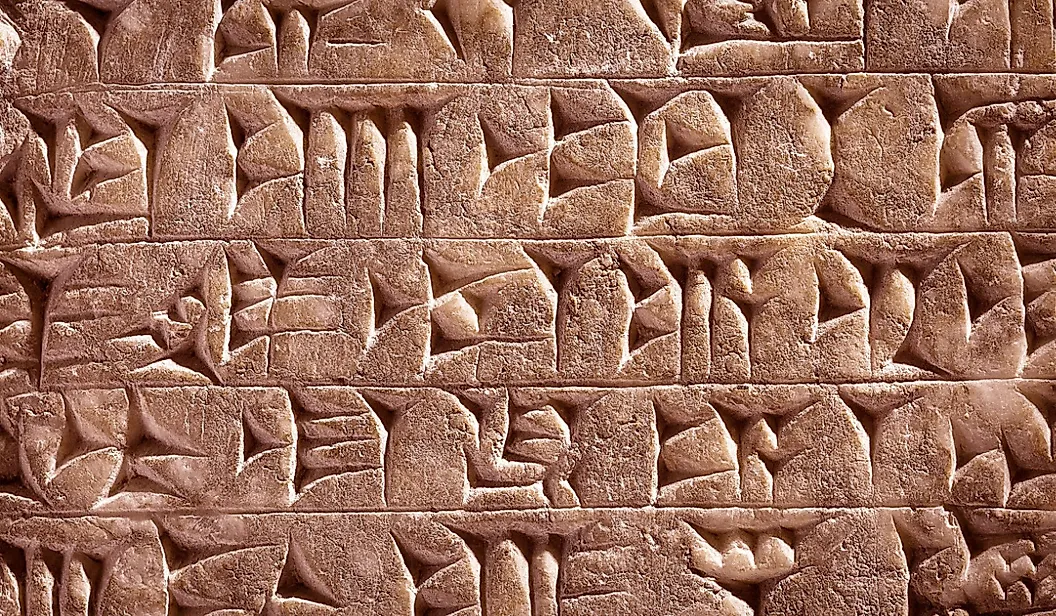
Much of what we know about Ancient Sumeria is thanks to stone tablets like these written in a language called Cuneiform.
Stone tablets with Cuneiform. Image credit Viacheslav Lopatin via Shutterstock

Historians believe humans developed a form of language as long ago as c. 35000 BCE. The proof is in the cave paintings created in the Cro-Magnon Man period (c. 50000 to 30000 BCE). These paintings appear to express daily life situations and tell different stories.

However, this was not true writing. Written language in its earliest form emerged in Sumer, southern Mesopotamia, in c. 3500 to 3000 BCE. This type of writing involved making marks in wet clay with a piece of reed and was called 'cuneiform.'

Cuneiform comes from the Latin word for 'wedge-shaped,' reflecting what the scripts looked like. Scribes would use a reed stylus to press certain symbols into clay tablets baked in the sun to preserve the text.

For context, most experts believe that the birth of cuneiform was around 3200 BCE, which would make it 1500 years before the woolly mammoth became extinct.

Clay Tablets to Hieroglyphs

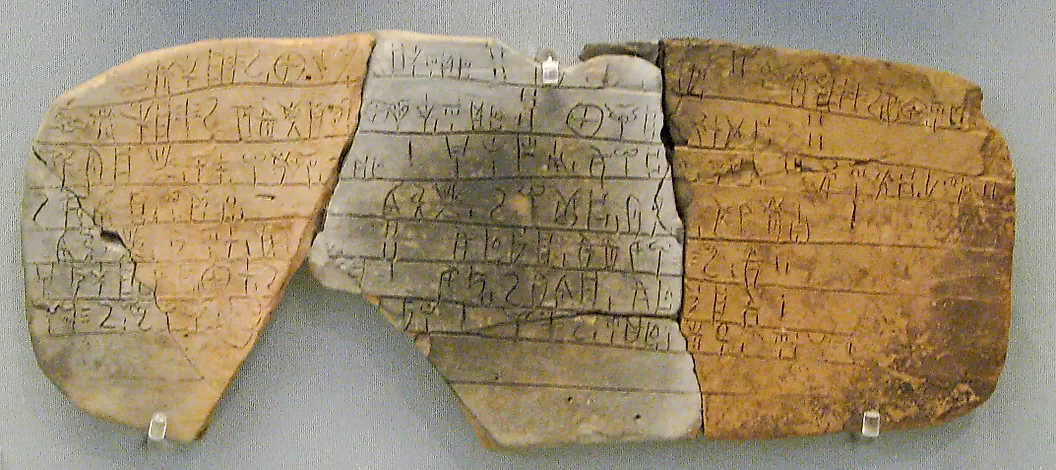
Clay tablet inscribed with Linear B script, from the Mycenaean palace of Pylos.
Clay tablet inscribed with Linear B script, from the Mycenaean palace of Pylos. Image credit Sharon Mollerus via Wikimedia Commons.

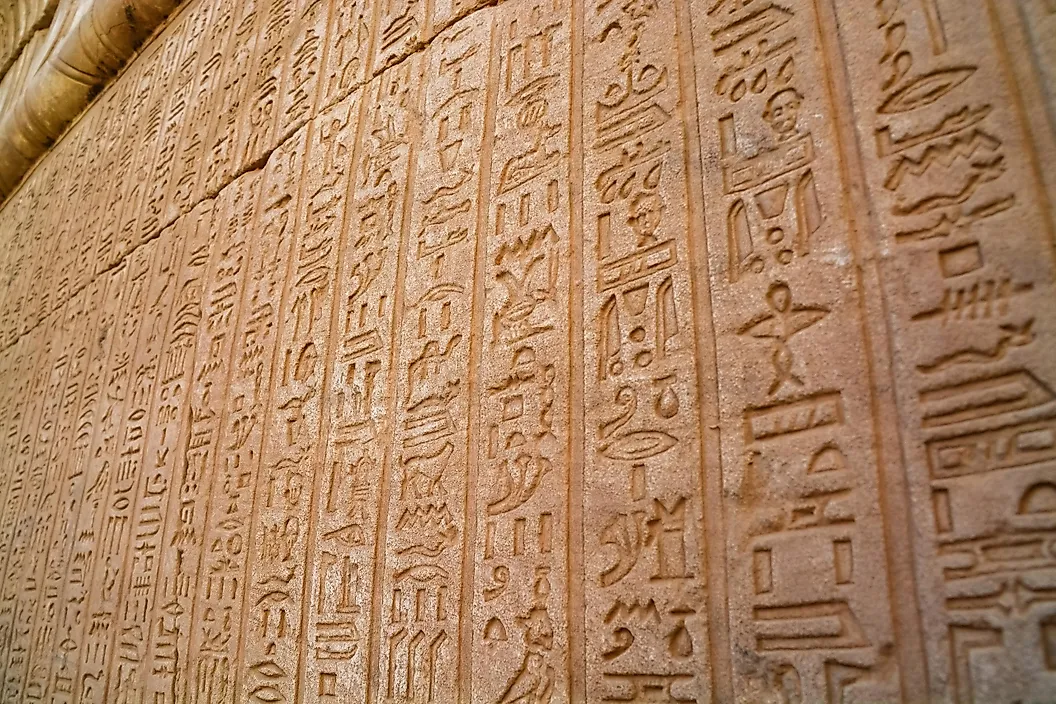
A couple of hundred years later, the Egyptians tried their hand at writing. Some historians argue that ancient pottery contained markings that may have been considered hieroglyphs in 4000 BCE, but most agree that hieroglyphs were only created around 3300 BCE.

Hieroglyphs were developed as an official language for religious practices and consisted of hand-drawn shapes and symbols. All scripts consisted of three types of signs: logograms, phonograms, and determinatives.

Because of their aesthetic quality, the Greeks, including Herodotus, believed the hieroglyphs were holy writing. As such, the name hieroglyph includes the words holy and writing (hiero and glypho). The Egyptian language referred to hieroglyphs as medu netjer or 'the gods’ words.'

Massive columns inside beautiful Egyptian landmark with hieroglyphics, and ancient symbols.
Massive columns with Egyptian hieroglyphics.

The Egyptians had so many signs and symbols in their hieroglyphs that they reached one thousand before being reduced to 750.

It is unclear where hieroglyphs started, but experts agree that they may derive from rock pictures. These pictures were created by prehistoric communities who hunted for a living in the West Nile desert.

Hieroglyphs remained in use for thousands of years, up until the closure of the Roman pagan temples in the 5th century CE. After this event, hieroglyphs essentially went ‘missing’ until Jean-Francois Champollion rediscovered them in the 1820s.

Champollion used the Rosetta Stone to decipher hieroglyphic language. Without the Rosetta Stone, the hieroglyphs and Egyptian history would still be a mystery.

Proto-Elamite Script

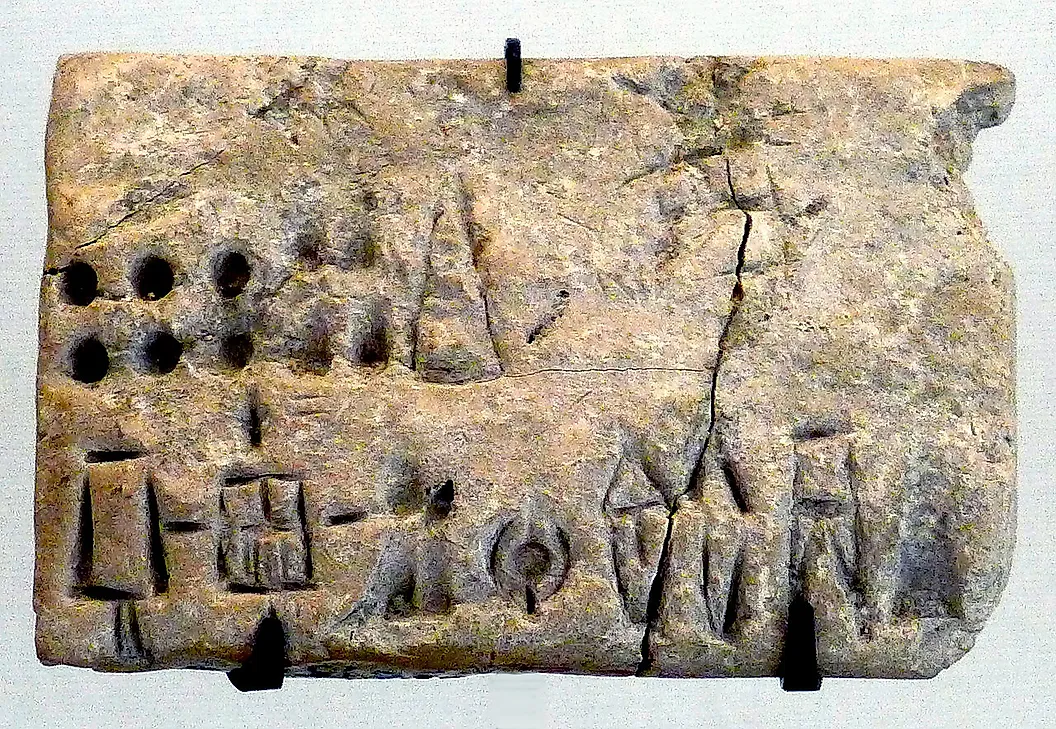
From the Tell of the Acropolis in Susa, excavated by Jacques de Morgan, 1901
Proto-Elamite tablet. Image credit Louvre Museum, CC BY 3.0, via Wikimedia Commons

The Proto-Elamite writing system was briefly used during the early Bronze Age before the Elamite cuneiform was introduced.

In the 9th millennium BCE, a token-based system was set up in some parts of the Near East. These tokens eventually became marked and evolved into clay bullae or marked envelopes.

Most historians assume that these clay bullae were the prototype for Proto-Elamite and proto-cuneiform. They were also used after the introduction of Proto-Elamite and proto-cuneiform.

The oldest Proto-Elamite script appeared in Susa, Elam, southwestern Persia, in 3100 BC. It contained around 1,000 signs and has yet to be fully deciphered.

Indus Script

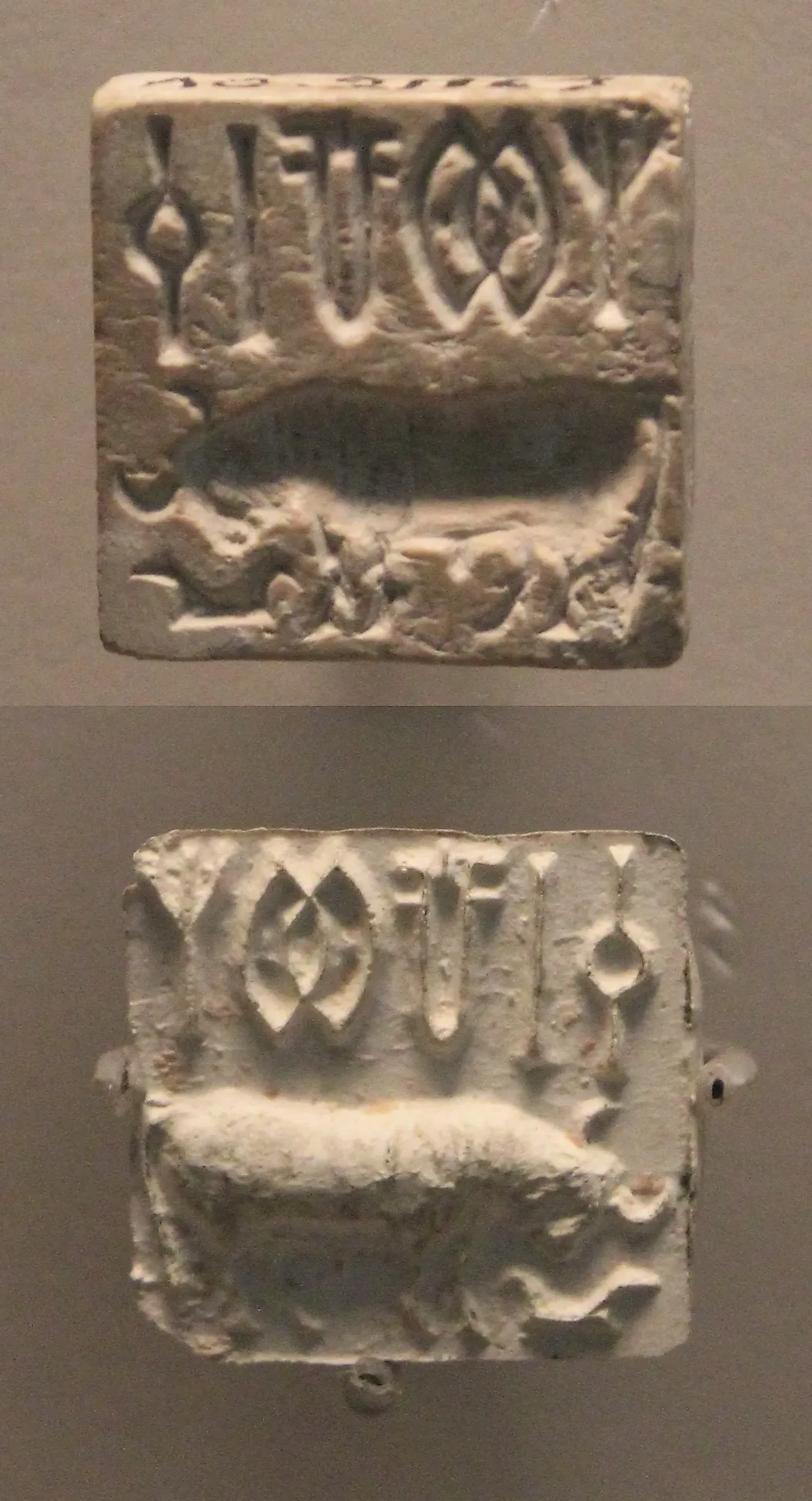
Indus script inscribed in stone.
Indus script inscribed in stone. Image credit Zunkir, CC BY-SA 4.0, via Wikimedia Commons

The Indus Valley Civilization produced the Harappan or Indus Script as a corpus of symbols. This is yet another script that has not been deciphered, after being discovered on seals and pottery.

Although experts don’t know what the symbols mean, they believe it may have been created to facilitate trade and administration. The script dates to 2600 BCE in the Indus Valley, which today is Pakistan and northwest India.

Chinese Oracle Bone Script

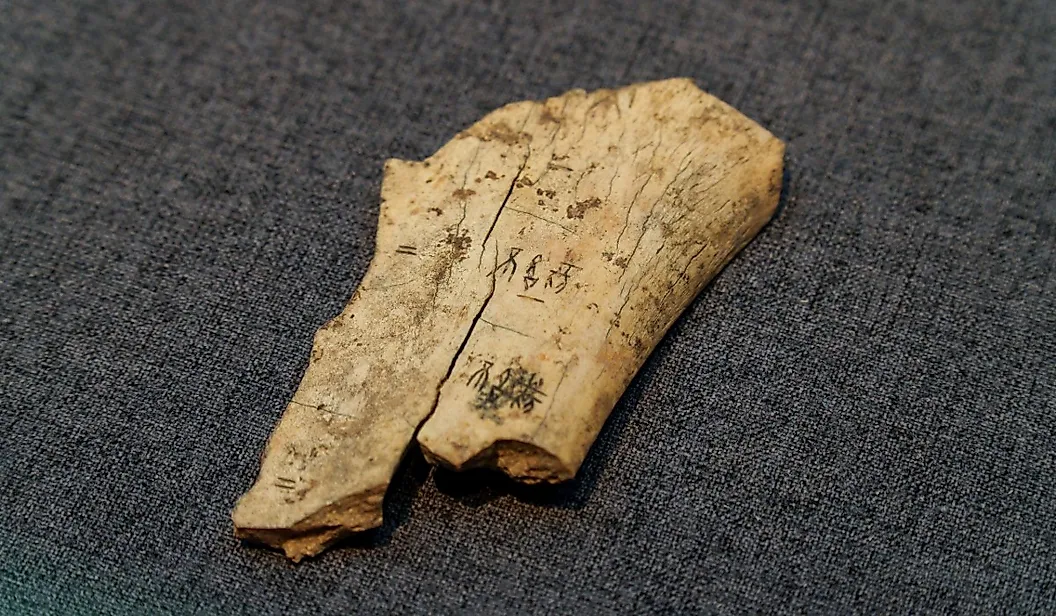
Oracle characters carved on tortoise shells during the Yin Shang period in ancient China.
Oracle Bone Script carved on tortoise shells during the Yin Shang period in ancient China.

China also created its own form of systematic writing, the Oracle Bone Script, in 1600 BCE.

The Chinese carved characters into ox shoulder bones or turtle plastrons. The writings on these bones mainly relate to divinations carried out for the Late Shang royal family.

The divinations involved exposing oracle bones to fire, creating cracks in them. The cracks were then interpreted and inscribed on the same bones.

Around 150,000 oracle bone inscriptions have been discovered, the vast majority in Yinxu. They are considered to be the earliest corpus of writing in China. They are also directly related to the Chinese family of scripts written over the next three millennia.

The Origins of the Alphabet

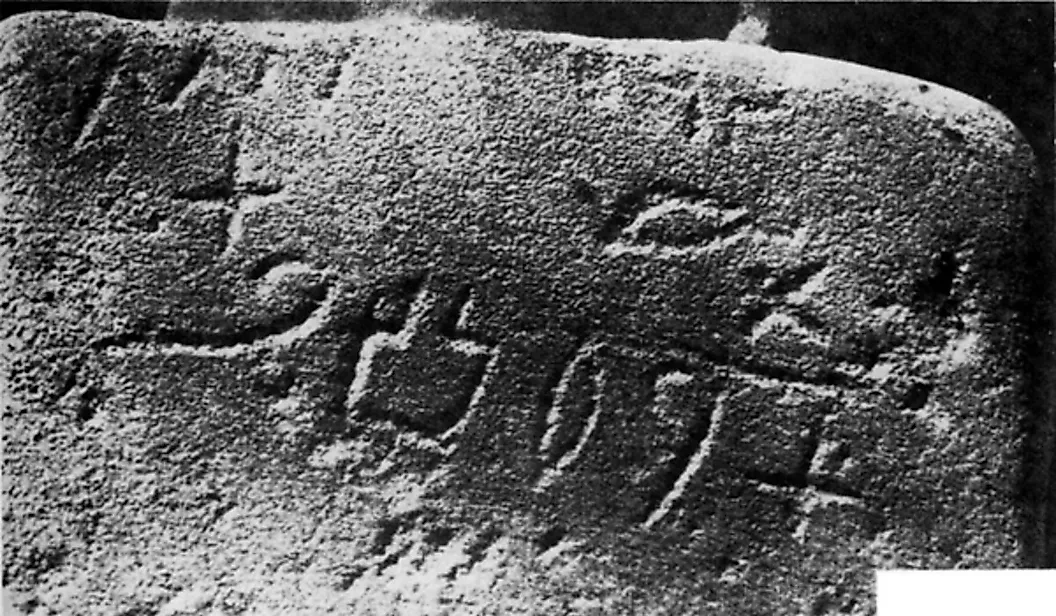
Specimen of the only certainly deciphered word in the Proto-Sinaitic script, b‘lt.

The first alphabetic writing system was developed between 1900 and 1700 BCE. Known as the Proto-Sinaitic script, this system involved 30 glyphs and translated Egyptian names into a Semitic language. The sounds of those names were converted to represent the sounds of the language.

Inscriptions of the Proto-Sinaitic script were first discovered at Serabit el-Khadim in Egypt and are thought to be the precursor to the Phoenician alphabet.

The Phoenician Alphabet

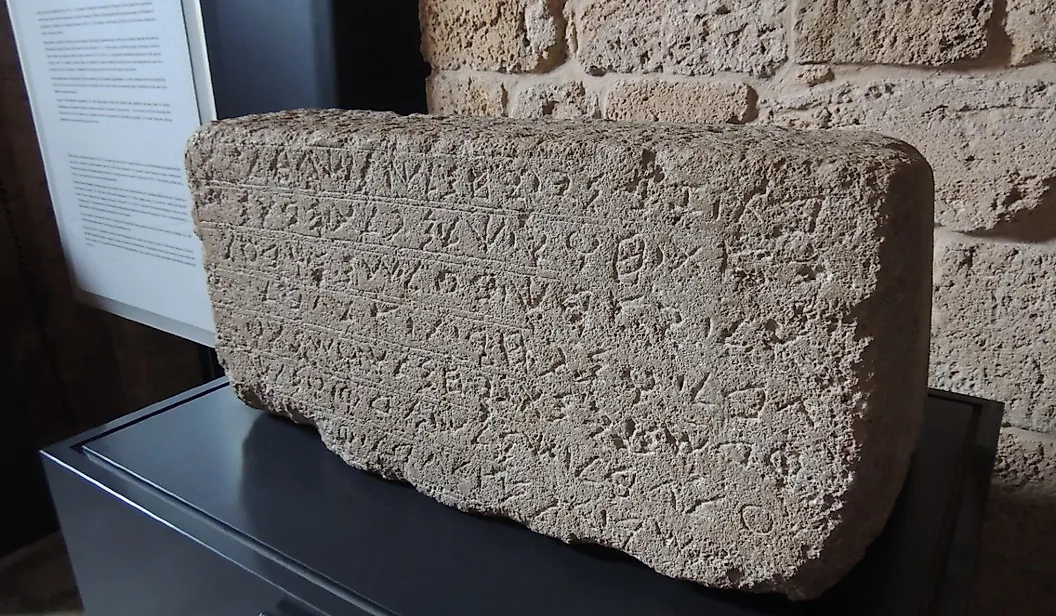
Phoenician alphabet in Byblos, Lebanon.
Phoenician alphabet in Byblos, Lebanon. Image credit Veniz Murad via Shutterstock

The Phoenician language was strongly influenced by Egypt, which is not surprising since Egypt controlled Phoenicia between the 16th and 14th centuries BCE. Phoenician belongs to Canaan (as a Canaanite language). It is also very closely related to Hebrew.

Historians know about the Phoenician language from the sparse extant written texts discovered. Before 1000 BCE, the language was depicted using common Mesopotamian cuneiform symbols.

The first Phoenician alphabet symbols were found at Byblos, but they were not derived from cuneiform but instead developed from Egyptian hieroglyphics.

There are 22 Phoenician letters standardized at the end of the 12th century BCE. However, the letters did not include vowels, making it incredibly hard to decipher.

The Greek Alphabet

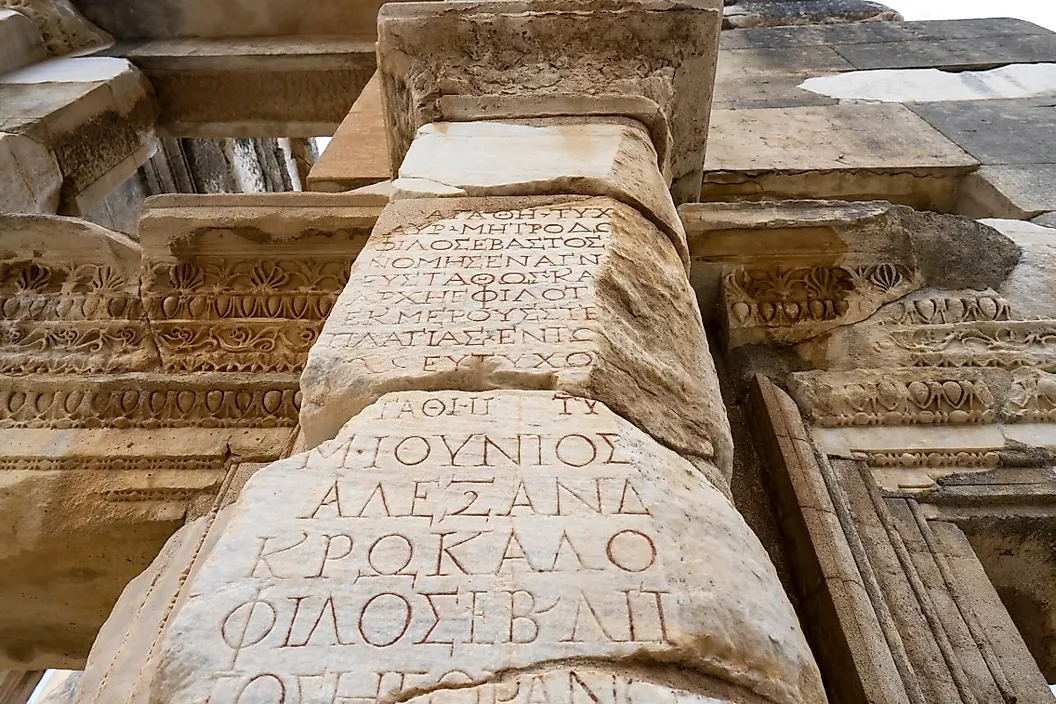
Ancient Greek inscriptions on the wall of Celsus Library in the Ephesus ancient city.
Ancient Greek inscriptions on the wall of the Celsus Library.

During the 8th Century BCE, the Phoenician script was transformed into the Greek Alphabet. In contrast to the earlier Mycenaean Linear B script, which was essentially used for utilitarian purposes, the Greek alphabet helped preserve literary traditions. It was used to write the Iliad and the Odyssey. It also helped the Greeks record religious traditions such as the Theogony.

From that time onwards, the Greek alphabet was instrumental in producing work that explored topics such as history, medicine, science, philosophy, zoology, astronomy, biology, creative writing, and much more.

The Greek alphabet also intrigued the Etruscans, who transmitted it to the Romans. In turn, the Romans used the alphabet to create the Latin script.

The Latin Alphabet

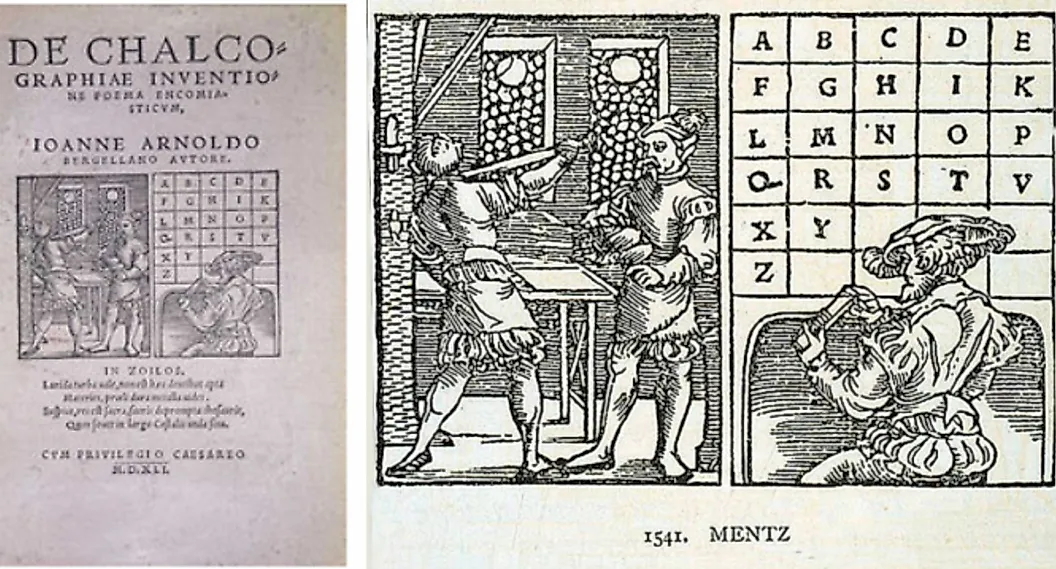
De chalcographiae inventione (1541, Mainz) with the 23 letters. J, U and W are missing.
De chalcographiae inventione (1541, Mainz) with the 23 letters. J, U, and W are missing.

The Latin alphabet was first used on objects like a cloak pin, a Roman Forum pillar, and the Praeneste Fibula. This dates back to the 7th century BCE.

The alphabet initially had 23 letters and was later expanded to 26 with the addition of J, U, and W. In the 9th century, the Carolingian minuscule standardized script and improved readability by introducing lowercase letters.

The Latin alphabet spread through Europe and was eventually adopted by several regions and languages, including the Americas, Asia, and Africa. This alphabet remains the world's most widely used alphabetic writing system, serving as the basis for writing English and other languages.

The Rest Is History

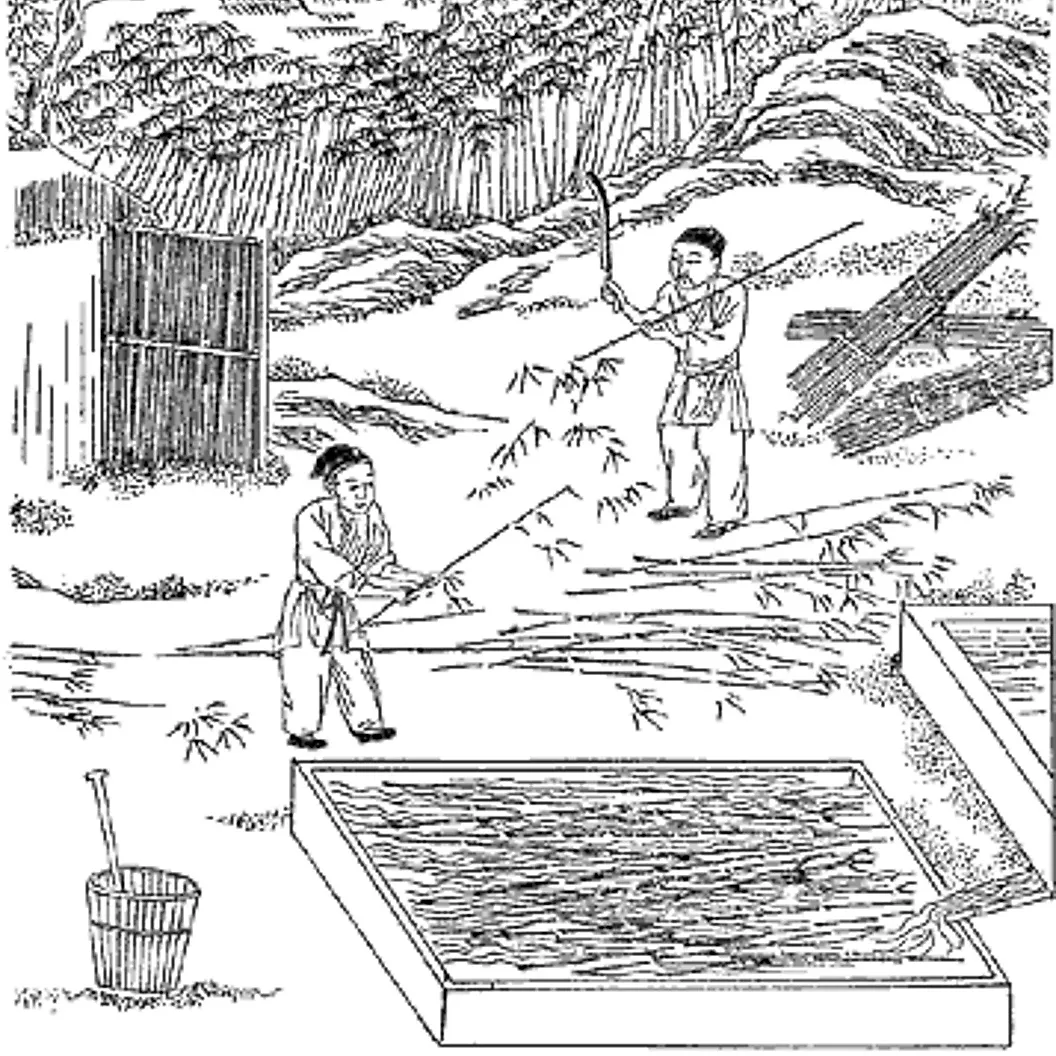
Ancient Chinese papermaking process.

Finally, paper was invented in 105 CE in China by court official Cai Lun, who introduced papermaking techniques. This revolutionized writing and record-keeping.

As paper wowed the world, more scripts were adopted. In the Arabian Peninsula, the Arabic Script became prominent with the spread of Islam in the 7th Century CE.

Saints Cyril and Methodius developed the Glagolic alphabet, which was adapted to create the Cyrillic alphabet. This was used to record religious texts for Slavic peoples in Eastern Europe in the 9th century CE.

Then, in 1440, one of the biggest writing-related inventions greatly impacted literacy and education. Johannes Gutenberg’s invention of movable type printing allowed for the mass production of books. Before the Gutenberg Printing Press, books had to be copied by hand, which took a very long time.

Modern Writing and the Digital Age

US-american travel type writer from 1896
Travel typewriter from 1896. Image credit Hannes Grobe, CC BY-SA 4.0, via Wikimedia Commons

By the 19th Century, typewriters had been invented, which immediately increased the speed of document production and helped standardize writing even further.

The real modern breakthrough came in the 20th century with the invention of computers and word processors. Suddenly, words no longer solely appeared on paper, but on a screen. Word processing software completely overhauled the writing, editing, and publishing process.

In the 21st century, this gave way to the internet and smartphones. Today, people can write messages on phones, including texts and emails. They also communicate via social media platforms, an extremely far cry from the first cuneiform clay tablets.

The Ongoing Legacy of Writing

The art of writing is one of humanity’s most transformative and valuable achievements. It has effectively altered civilization's journey from where it started to where it is now.

Understanding the history of writing helps us grasp just how ingenious our ancestors were. It also continually highlights this invention's impact on human progress.

As humanity continues to shape the form and function of writing, its enduring role in bringing people together throughout history will remain evident.

History " When Elephants Went to War In Hannibal’s Invasion of Rome "

Although the concept of war elephants sounds like a notion taken straight from a J.R.R. Tolkien novel, in the 3rd Century BC, this was a genuine war tactic for the general of the Carthaginian army, Hannibal Barca. In 218 BC, Hannibal took over the Carthaginian army after the deaths of his father and brother, and led it to confront the Roman Republic in what is now known as the Second Punic War. The sight of these massive elephants covered in armour stomping towards the front lines caused a significant psychological impact, striking terror into opposing armies before engagement had even begun. Unfortunately, what Hannibal considered one of his army's greatest strengths ultimately became its greatest weakness, arguably contributing to the war's outcome.

Alpine Crossing

Panoramic view of the snow-covered Alps and blue sky around Mount Titlis in Switzerland.

Before he could invade, Hannibal first needed to get to Italy. As he was unable to cross by sea due to simply not having access to enough allied ports for the volume of the crossing, he was forced to cross the Alps. Crossing the Alps presented several challenges, the first being the aggressive local tribesmen who lingered in the mountains. During the journey, there were several engagements with the tribesmen, resulting in heavy casualties on both sides of the battles. According to the account of the Roman historian Polybius, Hannibal and his army eventually drove them off and captured a nearby town, where they replenished their supplies.

A second challenge during this journey was navigating the freezing temperatures that accompanied the ice and snow of the mountainous landscape. Completing this feat with just his army alone would have been trying, but attempting it with an additional thirty-seven elephants was ill-advised. The climb up the Alps was not easy; one slip could cause pandemonium as soldiers and animals slid around, stepping and falling on each other.

It wasn’t just the environment that was the problem, either. Elephants eat over 150 kilograms of vegetation on average and spend approximately 80% of their day consuming food. This meant that a significant portion of time and energy was spent ensuring enough food was being carried with the army. These factors combined to cause the journey across the Alps to be grievously slow, the trip taking twice as long as it should have. The terrain was rugged and harsh, certainly not the ideal tropical environment that elephants thrive in, and by the time they had reached the end of the crossing, several of them had succumbed to the elements.

The Battle Of Trebia

A herd of elephants at theAddo Elephant National Park, South Africa. Image credit: JONATHAN PLEDGER/Shutterstock.com
A modern herd of elephants at the Addo Elephant National Park, South Africa. Image credit: JONATHAN PLEDGER/Shutterstock.com

The Battle of the Trebia River was the first large-scale battle in the Second Punic War. Although some of the elephants had survived the crossing, it is unknown how many elephants survived to fight in this battle. When the massive creatures appeared, stomping towards the opposing Roman army, the horses began to panic. The unfamiliar smell of the elephants, paired with their unusual appearance, was the cause of the horses bolting and freezing in response, overcome by fear. The Roman historian Zonaras reported in his account that had an elephant not become spooked when wounded, throwing the Carthaginian warriors riding on its back into confusion, the Roman casualties would have been far greater. Even with this happening, the Carthaginian army won the battle and continued their march to Apulia in southern Italy.

Although the elephants initially seemed like a useful intimidation tactic, the Battle of Trebia highlighted some of the logistical issues with employing the war elephants during battles. The elephants were easily startled, and when startled and panicked, they were exceedingly hard to control. A panicked war elephant could be just as much a threat to the Romans as it was to the Carthaginians’ troops, meaning they were extremely unpredictable in the heat of battle. Unfortunately, shortly after this battle, the majority of the war elephants succumbed, though it is debated whether this was from disease, the inhospitable environment, or a combination of both. Only one is known to have survived the campaign, the elephant which Hannibal himself rode in battle, named Surus.

The Battle Of Zama

Elephants are often seen in the forests along the Kwango's banks.
Modern-day elephants in the wild.

War elephants were not used in the subsequent battles of the Second Punic Wars until many years later in the Battle of Zama in 202 BC. The Carthaginian army created a new force of War Elephants, gathering 80 recruits captured in battle. This new force of elephants is said not to have been as well-trained as those deployed in the Battle of Trebia, due to their rapid capture. This, combined with the Romans’ developed tactics for addressing the threat of the War Elephants, led to the defeat of the Carthaginians by the Romans in the Battle of Zama, effectively ending the Second Punic War.

The battle began with the War Elephants charging at the Romans' front lines, a choice meant to cause intimidation and fear. However, the Roman army was prepared for the elephants this time. They used a combination of hidden troops engaging the elephants and the blasting of trumpets to startle and terrify the beasts. This tactic proved effective; the elephants chose to flee and were subsequently captured by the Roman army, or even turned on their own army's troops in the confusion. This clever tactic is arguably one of the reasons that the Romans won the Second Punic War.

Final Thoughts

The use of war elephants in Hannibal’s army was a tactic meant to intimidate and invoke fear and panic in the Roman soldiers he faced. In the ensuing panic and confusion, he witnessed the Carthaginian army defeating the Romans and seizing control of the Roman Republic. Although the strategy was successful in some cases, it came with significant costs associated with using such creatures as soldiers. Logistical challenges, combined with the inclement weather and unpredictability of the animals, ultimately led to the end of Hannibal’s war elephants. Despite these challenges, once the Second Punic War had ended, the Peace Settlement between the Romans and Carthage forbade the future use of war elephants. A decision essentially to prevent them from becoming a threat to the Romans once again, which speaks for itself in how formidable and daunting they were in the heat of battle. 

History " The Cult Of Isis And How An Egyptian Goddess Conquered Rome "

 From Egypt to Rome, many stories, religions, and leaders shine throughout this rich period of history. One of the more unique and influential aspects of this time was the famed cult of Isis, a group of people who worshiped the Egyptian goddess Isis in the Greco-Roman world. This cult was known for its secret initiation rituals, often involving fasting, cleansing, and spiritual offerings. Between 300 and 30 BCE, the cult gained immense popularity, influencing Greek and Roman religion and entering the Roman Republic. As Isis’s influence grew in the capital and temples were erected, many emperors, from Augustus to Hadrian, had unique opinions, from disdain to support for their belief. This article delves into the Mysteries of Isis and how this cult managed to conquer Rome.

The Goddess Isis And The Cult

The God of Osiris etching.

Before diving into the cult itself, it is vital to understand who Isis herself was. First mentioned in the Old Kingdom (2686 - 2818 BCE), Isis was one of the main characters of the Osiris myth, in which she resurrects her husband, the god Osiris. According to the tale, she helped the dead enter the afterlife and was considered the divine mother of the pharaoh. Later in the New Kingdom (1550 - 1070 BCE), Isis was known to be prominent in funery practices and was described as wearing Hathor’s (Egyptian goddess) headdress. Her influence grew greater in the first millennium BCE, making Isis one of the most widely worshipped Egyptian deities, and subsequently leading to the formation of the cult of Isis.

She was also the mother of Horus, the falcon-headed sky god who symbolized kingship and divine order. This maternal connection made her a figure of protection and legitimacy for rulers. In myth, she raised Horus in secret after Osiris’s murder, shielding him until he was strong enough to avenge his father. These maternal and magical qualities would make Isis especially appealing to broader Mediterranean audiences centuries later.

The cult of Isis flourished as a deeply personal and emotionally resonant faith, offering its followers promises of protection, healing, and a meaningful afterlife. Her temples, including the famed sanctuary at Philae, became sacred centers of devotion where worshippers made offerings and sought divine intervention. Unlike the more rigid state cults, Isis’s following welcomed individuals from all walks of life, from freed slaves to foreigners, allowing the religion to grow rapidly. However, the cult had strong beliefs, including the Mysteries of Isis, which were certain rituals for initiation, and even festivals like Navigum Isidis.

Mysteries Of Isis

Egyptian goddess Isis kneeling with traditional magic wand made with quartz, amethyst crystals, wood and feathers
Egyptian goddess Isis kneeling with traditional magic wand made with quartz, amethyst crystals, wood, and feathers.

One of the most intriguing factors of the cult of Isis was its initiation rituals, known as the Mysteries of Isis today. These rituals were voluntary and often kept very secret, involving aspects of ancient Egyptian religions, a connection to the afterlife, and transformation for the better. Most were held within the temple, away from the public's view. Even today, exact details are limited due to their secrecy, but historians have managed to extract some information. Most of what humans know today comes from the Roman novel, The Metamorphoses of Apuleius also known as The Golden Ass, which is about a man who was initiated into the cult.

According to the novel, initiation began with purification, which involved fasting, ritual bathing in sacred water, and wearing linen garments. Following this, one may be left in the darkness to represent spiritual death, a step before rebirth. Another likely initiation activity was to participate in mock death, in the hope of creating a new spiritual identity. Finally, members would receive a vision, supposedly from Isis, and would be a part of the cult of Isis. That said, much of this information comes from a work of fiction, so it is still debatable.

Role In Egypt And Prominence To Rome

Ancient statue of Isis in the temple in Pompeii
Ancient statue of Isis in the temple in Pompeii.

Isis’s transition into the Greco-Roman world accelerated during the Ptolemaic period, when the Egyptian and Hellenistic traditions began to merge. Under the Ptolemies, Isis absorbed traits of Greek goddesses like Demeter, Aphrodite, and Artemis, becoming a universal symbol of fertility, navigation, motherhood, and protection. Her image evolved from just an Egyptian deity to a cosmopolitan goddess recognizable from Alexandria to Athens.

Temples to Isis began appearing across the Mediterranean, from the Egyptian island of Philae to Delos in the Aegean Sea. These temples welcomed merchants, sailors, freedmen, and especially women, many of whom found in Isis a personal deity who promised salvation and divine favor in everyday life. Her worship involved processions, offerings, and sacred chants, often accompanied by the rhythmic rattle of the sistrum, her signature instrument.

By the late Republic, Isis had reached Rome itself, with shrines and temples emerging in the capital. Despite periods of imperial suppression, her cult remained deeply influential. Through her adaptable, compassionate image and mystical rites, Isis offered something most Roman deities did not: an emotional and spiritual bond with her followers. By the early Imperial period, she had become one of Rome's most widely venerated goddesses, her temples thriving across the empire. In spirit and in stone, Isis had conquered Rome not through force, but through faith.

Temples Across The Empire

Temple of Isis in Libya.

With its prominence in the Greco-Roman world, the cult of Isis developed many temples throughout Egypt, Rome, Italy, and nearby regions. These temples were vital for the group, offering a location for worship and rituals, as well as their initiation ceremonies. Along with this, temples hosted ceremonies like the Navigium Isidis, celebrating and extending the reach of the cult. The Philae Temple near Aswan in Egypt is considered to be the most important and famous. It remained open until the sixth century CE under Byzantine pressure and incorporated the relief of Isis with Osiris and Horus, becoming a pilgrimage site.

Apart from the Philae Temple, the Temple of Isis at Pompeii, and the Iseum Campense, incorporated the cult in the Roman world. The former was in Pompeii, near Naples, and is considered one of the best preserved, as it was restored after an earthquake in 62 CE. This temple was popular with women and slaves and played a significant role in the worship of Isis in Rome. Similarly, the Iseum Campense was prominent in modern-day Rome, as the main temple for Isis and Serapis. Although Roman authorities periodically banned it, the temple regained imperial favor and thrived during the Flavian period.

Imperial Attitudes: Suppression And Embrace

Bust of Emperor Caligula
Bust of Emperor Caligula. Image credit Alan_York via Shutterstock.

Throughout the Cult of Isis’s presence in Rome, many elites, leaders, and members of the public had differing opinions on its existence and beliefs. During the Late Republic, around 100 BCE, the attitude was quite averse to Eastern cults as a whole, as they seemed foreign and “different” to the traditional Roman pantheon. Many Roman elites viewed the cult as morally lax, as it allowed women, slaves, and foreigners to join through mysterious initiation rituals. This is prevalent through writers like Cicero and Seneca, who criticized such groups. Moreover, leaders such as Augustus banned Isis worship within the city limits of Rome in 28 BCE. Later, Tiberius took harsher measures, banning the cult again and destroying shrines, as indicated in works like Suetonius’s The Twelve Caesars.

Following the turn of the century, the opinion began to change, with more people accepting such groups. Emperor Caligula in the first century CE reversed some of Tiberius’s bans on cults, which led to a boost in popularity. The cult began to expand into Roman cities, and Isis was often merged with Roman goddesses. Following this, Emperor Vespasian encouraged the cult, and Emperor Hadrian built Egyptian-style structures at Villa Adriana. To this end, the attitude towards the Cult of Isis and many similar groups began with disdain and suppression, but gradually grew toward a sort of embrace and growth.

A Universal Goddess

The story of the cult of Isis shows how powerful beliefs can travel, change, and bring people together. From hidden rituals in Egyptian temples to huge celebrations in Roman cities, Isis became much more than just a local goddess. She stood for protection, hope, and connection, things people everywhere could relate to. Even though her cult was once banned, it ended up being embraced across the empire. In the end, Isis didn’t need armies, just faith and devotion to “conquer Rome.”

History " Göbekli Tepe, The 12,000-Year-Old Site That Shouldn’t Exist "

Around 6,000 years before the early peoples of Britain were gathering at Stonehenge, a similar structure was being painstakingly constructed thousands of miles away in the hills of Turkey near the Syrian border. The pre-Neolithic structure of Göbekli Tepe has intrigued and puzzled archaeologists and historians for decades. Large circles of towering limestone T-shape pillars dominate the site, some rising 16 feet into the sky. Through radiocarbon dating, scientists have established that Göbekli Tepe was built between the years 9600 B.C.E. and 8200 B.C.E., but they still don’t know exactly why.

Gobekli Tepe is an archaeological site in Sanliurfa, Turkey.
Göbekli Tepe is an archaeological site in Sanliurfa, Turkey.

Theories have been vigorously discussed and debated since the site was first uncovered in the 1960s, with some suggesting it’s a temple, others a burial place. Recent research adds to the speculation with signs that there was a permanent settlement in the area. While there are many unanswered questions around this ancient mystery, its importance is beyond doubt.

One of the most astounding things about the site is its timing. Built before agriculture, before pottery, and possible before organized religion as we understand it today, it’s hard to imagine the civilization that managed to erect such a sophisticated monument with its huge pillars and intricate carvings.

Pillars of Göbekli Tepe.

Pillars of Göbekli Tepe. Editorial credit: Ciga / Shutterstock.com

For one thing, Göbekli Tepe was built in the pre-Neolithic age when humans were hunter-gatherers, living a nomadic lifestyle and moving in small groups. Building Göbekli Tepe would have required the workers to settle in one place during its construction, leading some archaeologists to theorize that the site prompted, or at least heralded, the development of agriculture. If people were going to build and attend a place of worship, they would’ve needed the means to form a self-sustaining settlement there.

In this way, discoveries at Göbekli Tepe are rewriting the story of human history, filling in some of the blanks around the civilizational shift in early peoples from hunter-gatherers to farmers. Work at the site is ongoing and new theories are developing as this sacred space spills its secrets.

Excavating Göbekli Tepe

Animal carving within Göbekli Tepe.

There are over 20 structures at Göbekli Tepe, made up of large limestone pillars. Some of these pillars are over 16 feet tall, and at least one is estimated to weigh about 50 tons. Arranged in rings, the pillars aren’t all uniform. Some display finely wrought carvings of animals including foxes, scorpions, lions, and vultures. Others feature designs of humans and pieces of clothing. The pillars themselves appear to be anthropomorphic, decorated with what appear to be arms and faces.

After being discovered in the 1960s, Göbekli Tepe was abandoned in favor of other digs in the area. Revived again in the 1990s, this next phase of research uncovered several more structures allowing archaeologists to categorize them into ordinary buildings and special buildings.

Statue of a wild boar from Göbekli Tepe; it's displayed in the Sanliurfa Museum in Turkey.
Statue of a wild boar from Göbekli Tepe; it's displayed in the Şanlıurfa Museum in Turkey. Editorial credit: Mya2019 / Shutterstock.com

The special buildings are those that show no evidence of occupation and boast the largest, most ornate pillars. From the structure of the pillars — some facing inwards, some angled towards others — archaeologists believe these structures were an important, perhaps sacred, meeting place.

There have been many fascinating artifacts dug out of the ground at Göbekli Tepe but one in particular has captured public imagination. In 2023, researchers unearthed a life-sized statue of a wild boar estimated to be around 10,500 years old. Placed between pillars, the statue was clearly a focal point of the structure it was found in and was even decorated. Red, white, and black pigment was found on its head and body.

Farmers or Hunter-Gatherers?

Carvings at Göbekli Tepe.

The people who built and used Göbekli Tepe did so in between eras, at the time of a great societal shift. The world was transitioning from a more nomadic culture to settlements that could support themselves as they grew through farming crops, domesticating animals, and storing food.

So which were the people of Göbekli Tepe, hunter-gatherers or farmers? Given the unusual nature of the temple-like structures, the original theory placed them firmly in the former camp but, as more was unearthed from the site, the picture became blurry.

The discovery of new buildings in the 2000s showed that people weren’t just occasionally coming to Göbekli Tepe to worship or gather. Discoveries of fragments of human bones suggest a settlement where people were living full-time.

The anomaly however is that archaeologists haven’t found any evidence of farming. Bone fragments from the site show that the people were surviving on the usual hunter-gatherer fare of wild animals (in this case gazelle) and wheat. The people of Göbekli Tepe appear to have had a foot in both camps, wanting to settle down but not quite ready to start farming.

Exploring Göbekli Tepe

Tourists at the ancient Site of Gobekli Tepe in SanliUrfa, Turkey.
Tourists at the ancient site of Göbekli Tepe in Şanlıurfa, Turkey. Editorial credit: acsen / Shutterstock.com

In 2018, Göbekli Tepe became a UNESCO World Heritage Site and, as a result, is now a major contributor to Turkey’s tourism industry. Although the site is an active excavation, it is open to the public and has a Visitors Center and accessible walking paths.

The closest airport to Göbekli Tepe is in the nearby city of Şanlıurfa. First time visitors are encouraged to see the Şanlıurfa Archaeological Museum while they’re in the city. Home to around 10,000 ancient artifacts, the museum has an extensive exhibit on Göbekli Tepe that goes into detail on its origins and construction and includes a detailed replica of the stone circles.

Over 2.5 million people have visited Göbekli Tepe since it first opened to the public in 2019. As they wander the site, these travelers are walking in the footsteps of one of the world’s most ancient civilizations. Every discovery made at this important place helps us bridge the gap across the millennia to gain incredible insights into how early peoples lived.